
WILDLIFE RESCUE
The Pelican That Knocked for Help
A knock no one expected
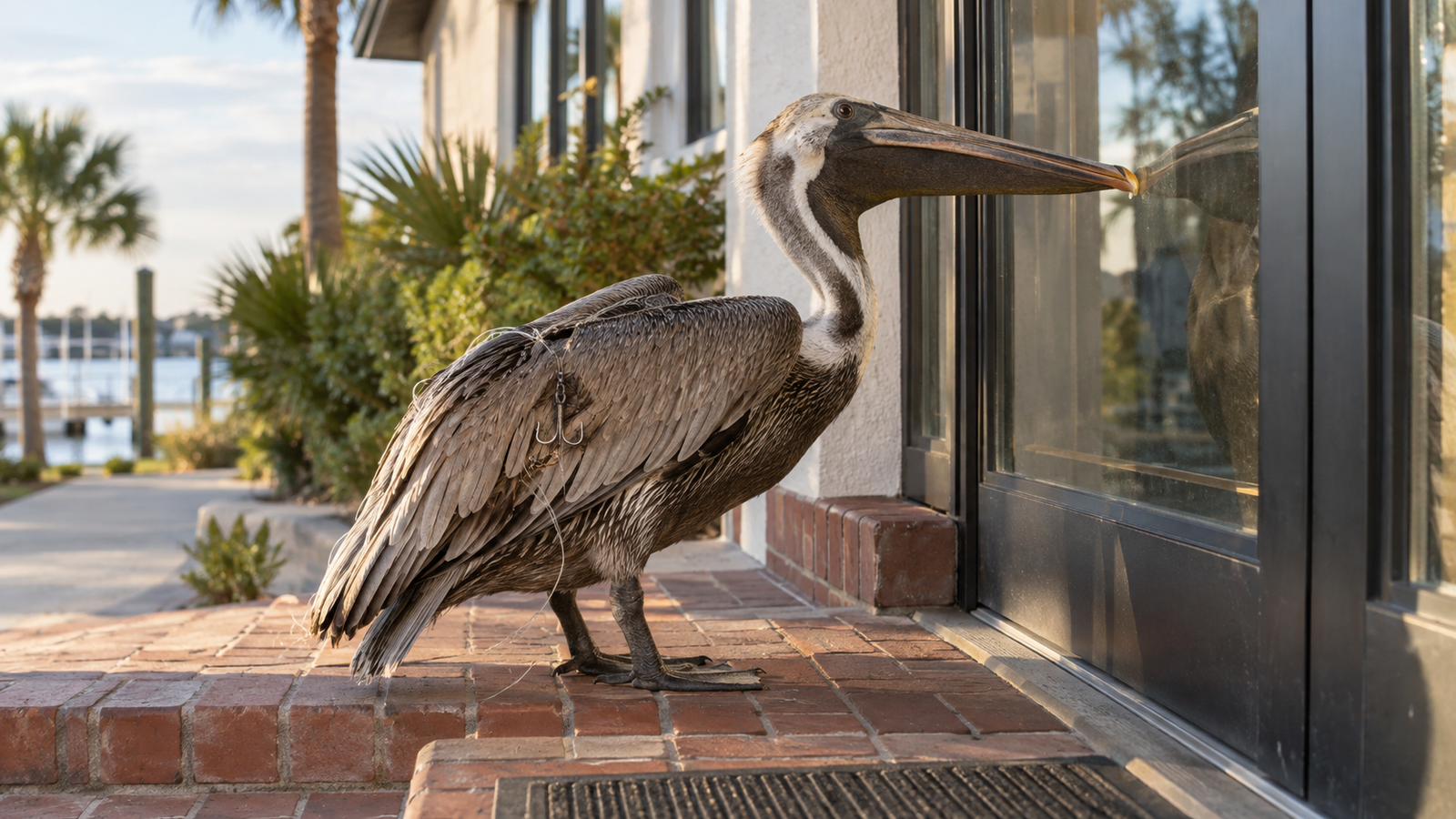
At NOAA’s Southeast Fisheries Science Center laboratory in Panama City, Florida, staff saw a brown pelican standing at the glass entry. The bird began tapping its bill against the door. When the team looked closer, they found heavy monofilament wrapped around it, a double-barbed treble hook embedded in the right wing, and cactus spines in the left foot.
The bird had reached people who knew how to respond. Staff safely restrained it, cut the barb, removed the hook and unwound several feet of fishing line. The entire operation took about ten minutes. After a health check, the pelican was released and flew away.
That ending is unusually hopeful. Entangled wildlife can panic, deepen an injury or become unable to fly, feed or escape predators. The safest response is to contact trained wildlife professionals—not to chase or grab the animal.
Built for the plunge
The brown pelican, Pelecanus occidentalis, is one of the world’s few pelicans that plunge-dives for fish. From above the water it folds its wings, points its bill and drops toward a moving target. Air sacs beneath its skin help cushion the impact.
Adults can reach roughly 6.5 to 7.5 feet across the wings. Their famous throat pouch is not a permanent food-storage bag; it works more like a flexible fishing net. After a catch, the pelican drains the water and swallows the fish.
Brown pelicans also carry one of conservation’s great recovery stories. DDT-related eggshell thinning once helped push U.S. populations into severe decline. Legal protection and the ban on DDT allowed a dramatic comeback—but fishing gear remains a modern, preventable hazard.
The danger that stays behind
Monofilament fishing line is strong, nearly invisible and slow to break down. A strand left near a pier, shoreline or nesting colony can keep trapping animals for years. Hooks can add puncture wounds while the line tightens around wings, legs or bills.
Anglers can reduce that risk by securing loose line, using designated recycling tubes, retrieving damaged tackle when it is safe, and considering barbless hooks. If a bird is accidentally hooked, NOAA advises against simply cutting the line and letting it fly away. Reel it in carefully and contact a trained responder when needed.
This pelican found a door. Most entangled animals never get that chance. Prevention is the rescue we can perform before an emergency begins.
Meet the brown pelican in Learn & Grow →
Reporting notes
Primary report: NOAA Fisheries, “Knocking for Help: A Pelican’s Unlikely Rescue,” published September 15, 2026. Species context checked against U.S. Fish & Wildlife Service and Cornell Lab of Ornithology references.
The rescue account is real. The illustration is newly created for WWATV and is not presented as documentary evidence of the event. No agency endorsement is implied.