
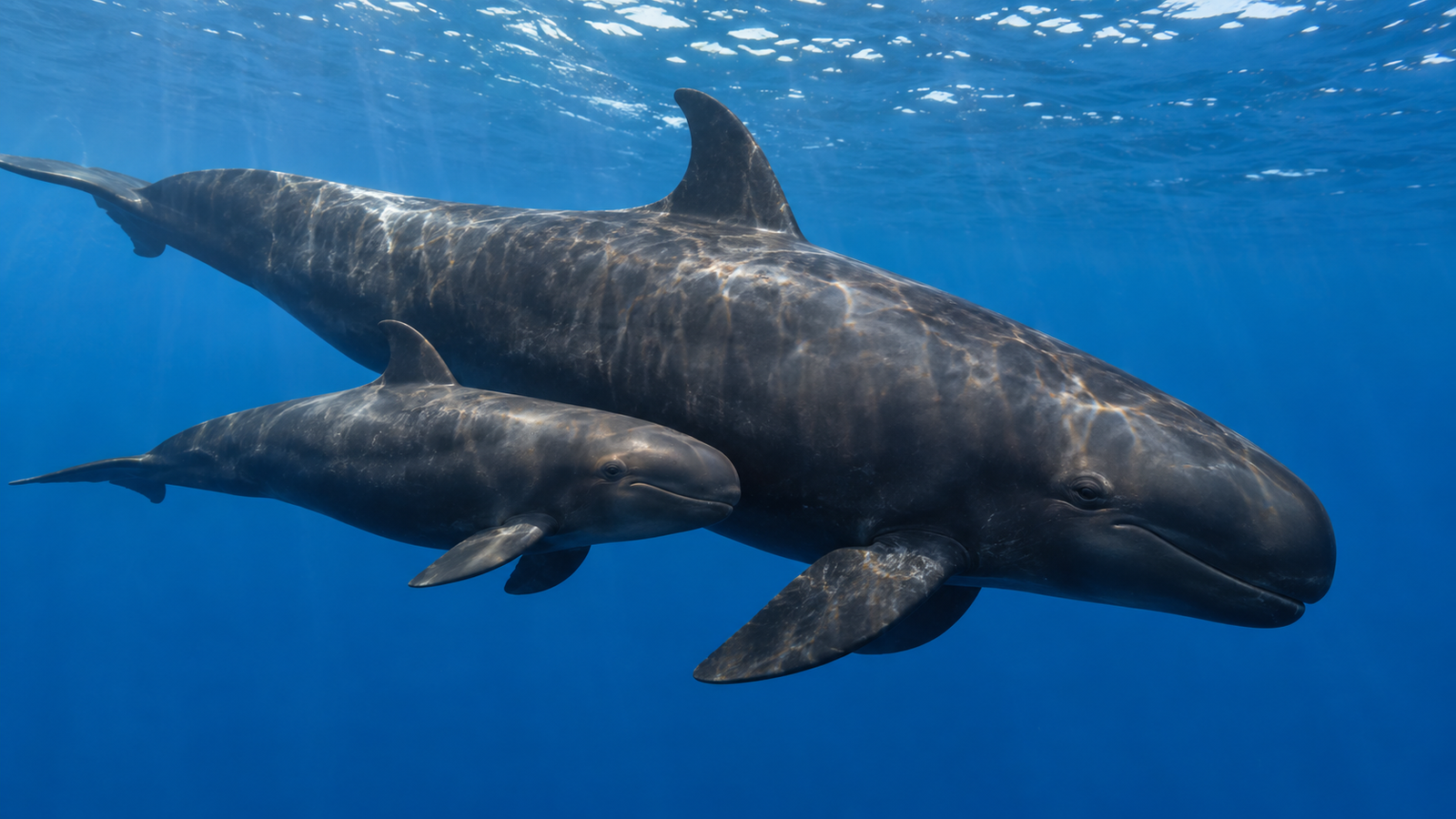
WWATV AI-generated editorial illustration—not a photograph of the reported event or research. Exact species and verified context are depicted; no documentary claim is made.
POPULATION WATCH
Two New Calves Bring Hope to Hawaiʻi’s Rarest False Killer Whales
Pseudorca crassidens · NOAA report published September 16, 2026
Researchers have photographed two new calves in a population believed to number only about 140 animals. Their arrival is encouraging—but the species’ slow reproductive rhythm makes every calf important.
The story
NOAA researchers first photographed the newborns in February and saw them again in August, now about eight months old and appearing strong. Only ten newborn calves have been documented in this population since 1999, so two in one year is remarkable.
How the work is done
False killer whales are large oceanic dolphins, not orcas. Females may not reproduce until roughly eight to eleven years old. Pregnancy lasts about fourteen months, calves can nurse for up to two years, and mothers may calve only once every seven to nine years. Some females live into their sixties and pass through menopause.
What the evidence means
These whales live in close social clusters. That means a calf is more than a number: it enters a long-lived network of relatives and companions. Scientists will continue photo-identification and long-term monitoring to learn whether the calves survive and how the population changes. The honest conclusion is hopeful, not final.
Explore Main Hawaiian Islands insular false killer whale in Learn & Grow

WWATV Headquarters
8987 E Tanque Verde Rd Ste 310
Tucson, AZ 85715