
ANIMAL RESEARCH SPOTLIGHT
How Scientists Discover an Animal No One Has Named Before
A new branch on the tree of life
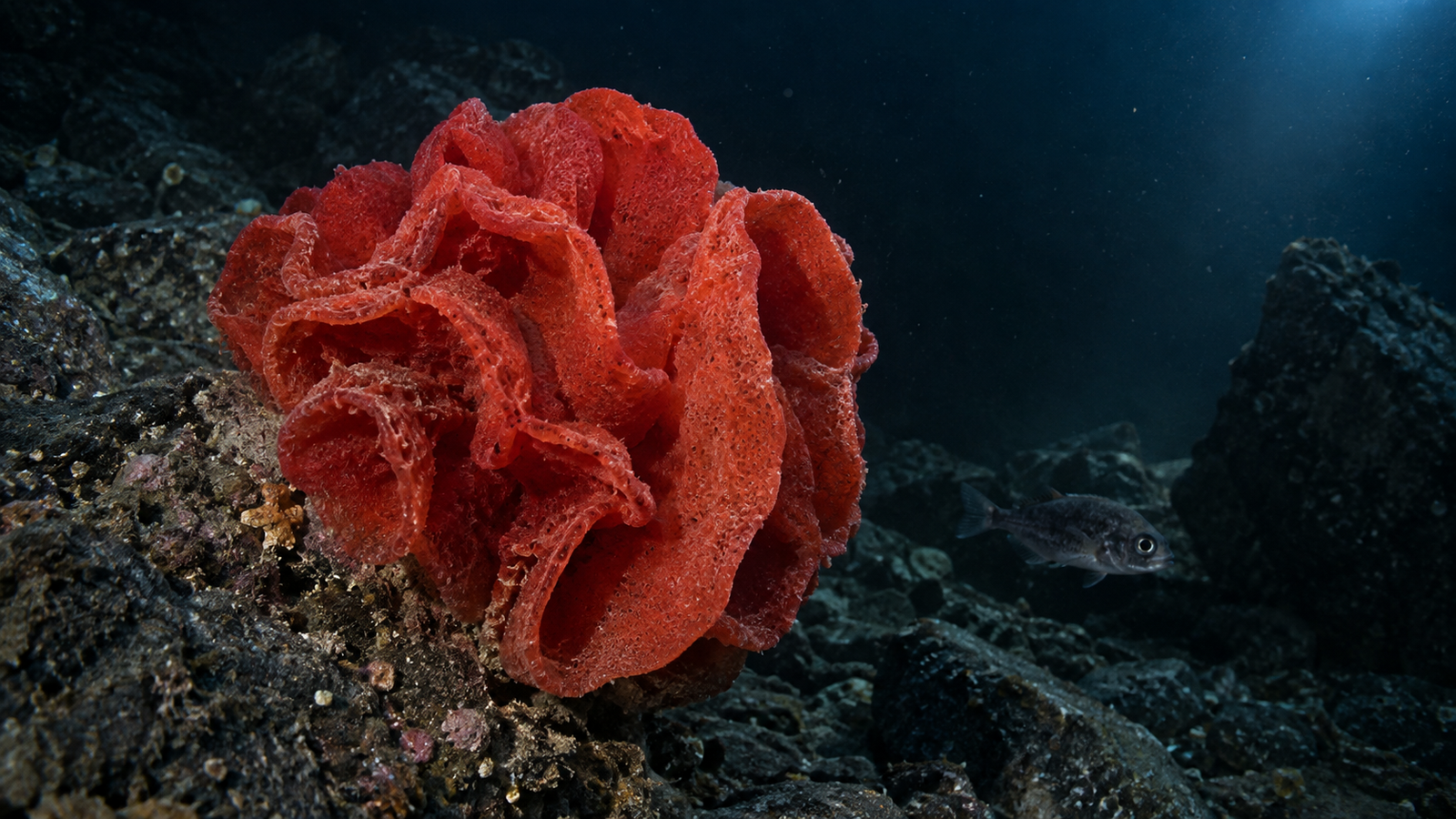
Meet Polycapus rubrum: a vibrant red, thick-layered sponge from deep water in the Gulf of Alaska. Taxonomists concluded that it was not merely a new species. Its anatomy was distinctive enough to establish a new genus—the category directly above species.
It was one of nine newly described deep-sea sponge species reported from Alaska in 2026. Together, the discoveries raised the number of sponge species known from Alaska waters to 232. Because deep, rocky habitat is difficult to sample, researchers think many more remain undocumented.
Sponges are animals, not plants. They filter water through networks of pores and canals, moving oxygen and food through tissues without a heart, brain or true organs. Their simple-looking bodies can hold complex skeletal structures and chemical signatures that separate one species from another.
Step one: bring evidence up from the deep
The specimens came from NOAA’s annual Alaska bottom-trawl surveys, including collections dating to 2012. A survey vessel samples defined locations so scientists can connect each specimen to depth, position, habitat and date. That context matters: a nameless animal without reliable collection data is much harder to place in an ecosystem.
Bottom trawls cannot reach every place. Steep rocks and some very deep habitats remain inaccessible, so the sample is incomplete by design. Good research states that limitation plainly. It does not pretend that the map of known animals is the same thing as the full living ocean.
Once aboard, specimens are preserved, labeled and routed to specialists. Field guides can narrow the possibilities, but a new species requires far more than visual resemblance.
Step two: reveal a hidden skeleton
In the laboratory, taxonomists cut very thin sections both parallel and perpendicular to the sponge’s surface. This exposes the three-dimensional architecture of its internal skeleton. They also dissolve small pieces of tissue with nitric acid or bleach, rinse the remaining material, concentrate it in a centrifuge and mount the isolated skeletal elements—called spicules—in resin.
Under a microscope, spicule shapes and sizes become a biological fingerprint. Their arrangement can separate close relatives that look almost identical from the outside. For Polycapus rubrum, that combination of body form and microscopic architecture supported the designation of an entirely new genus.
This is why taxonomy is not a naming contest. It is evidence-based reconstruction: morphology, collection records and comparison with previously described animals all have to agree.
Step three: turn one specimen into a global tool
Researchers also use DNA barcoding—reading a standardized stretch of genetic material and comparing it with other sequences. New reference barcodes can be deposited in GenBank, a public international DNA database. Future teams can then compare an unknown sample against that verified record.
The reference library has another powerful use: environmental DNA, or eDNA. Animals leave microscopic genetic traces in seawater. A bottle of water may reveal that a species is present even when no camera or net captures it. Repeated samples can help scientists estimate distribution and change over time.
Those observations feed maps and ecological models that relate species records to depth, temperature, seafloor conditions and other variables. A model does not “know” where every sponge lives; it estimates likely habitat from the evidence supplied. Sparse sampling, inaccessible terrain and incomplete DNA libraries create uncertainty that scientists must report.
Why naming one sponge matters
Management depends on knowing what exists and where it lives. Deep-sea sponge communities create habitat, filter seawater and support other organisms. If several visually similar sponges are mistakenly treated as one species, a vulnerable range can disappear inside an inaccurate map.
Sponges also produce unusual chemical compounds, some of which may someday inspire useful medicines. That is a research possibility—not a promise about Polycapus rubrum. The immediate value is more fundamental: a new, testable piece of knowledge about the living ocean.
From trawl station to microscope slide, DNA database and habitat model, this discovery shows how patient research turns one strange red animal into information the world can use.
Search for deep-sea life in Learn & Grow →
Reporting notes
Primary sources: NOAA Fisheries, “Nine Species of Deep-Sea Sponges Discovered in Alaska,” September 10, 2026; and Lehnert & Rooney, “Four new demosponges from Alaska and the designation of a new genus in Hymedesmiidae,” Zootaxa, 2026.