CONSERVATION IN ACTION
A Lion Stronghold Begins to Breathe Again
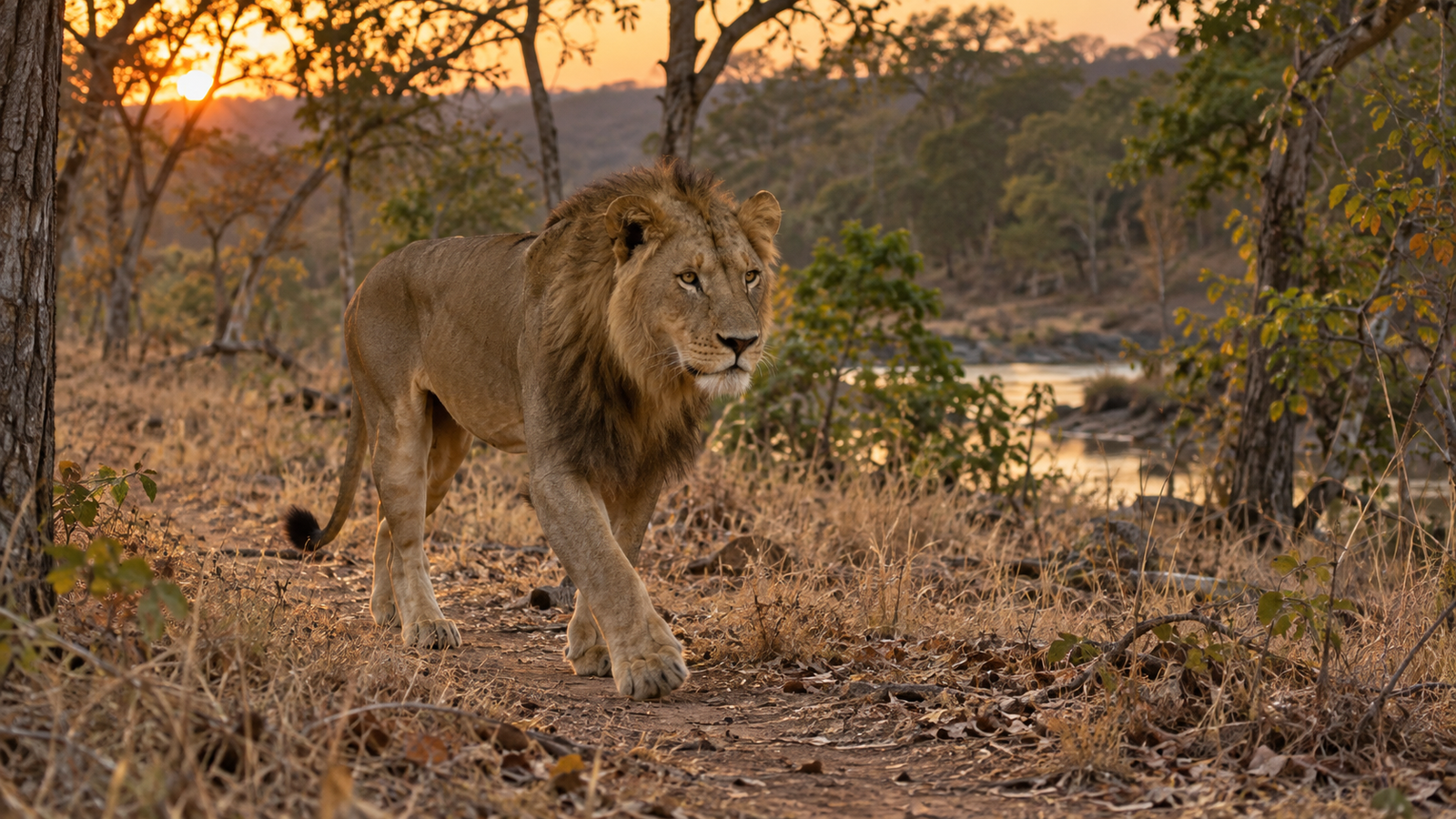
A rare lion at the edge of survival
West African lions belong to the northern lion lineage, Panthera leo leo. They survive in small, fragmented populations and are regionally Critically Endangered. Niokolo-Koba National Park in Senegal is one of their most important remaining strongholds.
The park protects a mosaic of savanna, woodland and gallery forest along rivers. That variety supports prey, cover and water—but a protected boundary alone cannot guarantee safety. Poaching, habitat pressure and the loss of prey can empty a landscape even when it still looks wild from above.
That is why the park’s recent signs of improvement deserve attention. They represent years of field work, management and cooperation, not a sudden miracle.
Patrol boots and camera eyes
IUCN reported that strengthened patrols covered nearly half of the park in 2025. Patrol records help teams identify where threats occur, where coverage is thin and how to deploy limited staff more effectively.
Systematic camera-trap surveys add a second line of evidence. Motion-triggered cameras remain in the field day and night, recording animals that people may rarely see. Scientists organize the photographs by location and time, identify species and individuals when markings allow, then compare detections across survey periods.
Those surveys reported positive trends for lions as well as buffalo, roan antelope, hartebeest and African wild dogs. Prey recovery matters to lions; protecting a predator without rebuilding the food web beneath it is not a durable plan.
Progress—with the brakes on the celebration
IUCN’s 2025 conservation outlook for Niokolo-Koba improved from “critical,” the rating recorded in 2014, 2017 and 2020, to “significant concern.” That is meaningful movement, but the wording matters. Significant concern is not the same as secure.
A camera-trap trend can show that detections are increasing, but it does not erase every risk or prove that all animals across the enormous park are recovering equally. Weather, camera placement, animal movement and survey effort can affect results. Long-term, comparable monitoring is what turns a hopeful signal into reliable evidence.
The strongest lesson is that recovery work is a system: science, patrols, habitat restoration, species protection and community participation reinforcing one another.
What this lion asks of us
Wild lions need room, prey and tolerance from the people who share their wider landscape. Supporting conservation is not only about admiring a predator. It means protecting the rivers, grasses, forests and communities that make its life possible.
Niokolo-Koba’s story is still being written. The honest headline is not “saved.” It is “moving in the right direction—and worth staying with.”
Explore the lion’s world in Learn & Grow →
Reporting notes
Primary reporting: IUCN, “Supporting the Recovery of Niokolo-Koba National Park: How IUCN is Driving Conservation Action,” published September 11, 2026. Habitat context checked against UNESCO’s Niokolo-Koba National Park profile.